Regional Cities Victoria Roads Roundtable

VIEW THE PDF DOCUMENT

COMMUNIQUE

17 April 2026


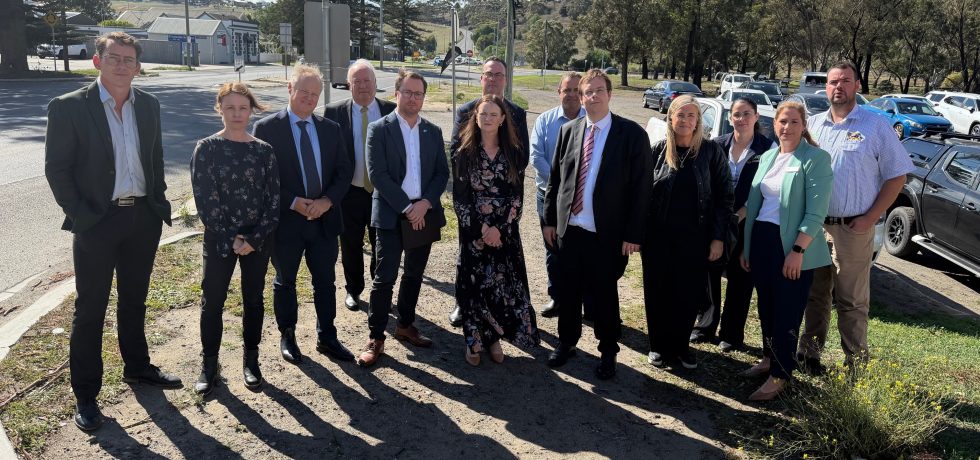
PHOTOGRAPH ATTACHED: L-R

Cr Thomas Prince – Ballarat Mayor, Cr Ali Cupper – Mildura Mayor, Cr Michael Gobel – Wodonga Mayor, Peter Anderson – CEO Victorian Transport Association, Charlie Thomas – CEO Victorian Farmers Federation, Cr Tracey Hargreaves – Ballarat Mayor, Nigel Powers – National Transport Research Organisation, Cr Brian Klowss – Horsham Mayor, Cr Ben Blain – Warrnambool Mayor and Chair of Regional Cities Victoria, Lisa Patroni – CEO Victorian Tourism Industry Council, Alina Hawkins – COO Livestock and Rural Transporters Association of Victoria, Cr Kate Makin – Rural Councils Victoria and Mayor of Corangamite Shire, Joel Haberfield – Livestock and Rural Transporters Association of Victoria Animal Welfare Chair.


Regional Cities Victoria (RCV) convened a regional roads roundtable in Geelong this week bringing together key stakeholders from across Victoria’s transport, tourism, agriculture, freight and local government sectors.

The purpose of the roundtable was to outline RCV’s advocacy for a $2 billion regional roads package ahead of the 2026 Victorian State Election, and to facilitate a shared discussion on the condition, safety and economic importance of the regional road network.

Participants included representatives from the Victorian Tourism Industry Council, Rural Councils Victoria, Livestock and Rural Transporters Association, National Transport Research Organisation, Victorian Transport Association, Victorian Farmers Federation and Mayors and CEOs from Victoria’s 10 largest regional cities.

Thursday’s roundtable provided a forum to share perspectives, evidence and real-world experiences of regional road conditions, and to explore opportunities for coordinated advocacy toward greater investment in the network.

Discussion highlights:

  • Widespread concern about the declining condition of regional roads, with participants citing deteriorating surfaces, potholes and structural failures across key routes.
  • Strong acknowledgement of the safety implications, particularly for heavy vehicle operators, emergency responders and vulnerable road users.
  • Clear evidence that poor road conditions are impacting freight efficiency, agricultural supply chains and tourism access, with flow-on effects for regional economies.
  • Recognition that regional roads are also vital social connectors, enabling people to access family, community networks, education and healthcare, and to participate in activities such as regional sport and recreation.
  • Recognition that current maintenance levels are insufficient to keep pace with network deterioration, leading to a growing backlog of required works.
  • Discussion of the compounding impacts of recent natural disasters and increased freight volumes, accelerating wear and tear on already strained assets.


Points of consensus:

  • Regional roads are critical economic and social infrastructure, supporting both productivity and community connection.
  • There is an urgent need for increased and sustained investment to prevent further deterioration and escalating long-term costs.
  • Safety outcomes on regional roads are unacceptable and require immediate intervention.
  • Investment in regional roads delivers statewide benefits, including improved supply chains, stronger communities and more connected regions.
  • A coordinated, cross-sector advocacy effort is required to ensure regional roads are prioritised in the lead-up to the state election.


Shared commitments:

  • Participants agreed to support a unified advocacy approach calling for increased investment in regional roads.
  • Stakeholders committed to sharing available data, case studies and evidence to strengthen the case for funding.
  • Agreement to continue engagement and collaboration beyond the roundtable to maintain momentum.
  • A shared intent to elevate community awareness of both the safety risks and the social and economic impacts of declining road conditions.


Comments from RCV Chair Cr Ben Blain, Mayor of Warrnambool:

“Regional roads are a safety and productivity issue – potholes and declining asset condition are putting lives at risk and impacting the economic drivers that underpin freight, agriculture and tourism.

This is also about regional people and connection – families, communities and local sport. For many regional Victorians, safe access to everyday life depends entirely on the roads they travel.

Right now, too many regional Victorians can’t rely on the roads they need to get to work, school or sport safely.

We heard loud and clear from industry, and our communities every other day, that the condition of our roads are dangerous and holding regional Victoria back.

A $2 billion regional roads package over four years is an essential down payment on safety and connectivity for economic growth.

This is not just a regional issue – it’s a statewide economic imperative. Investing in regional roads means stronger supply chains, safer commutes and a more productive Victoria.

This roundtable showed there is strong alignment across sectors. We are united in calling for the investment needed to restore confidence in our regional road network.”

 
Media Contact:
Emily Broadbent – 0413 133 627
BACK TO TOP

RCV launches $3bn campaign for regional growth ahead of election

VIEW THE PDF DOCUMENT

MEDIA RELEASE

16 April 2026

Regional Cities Victoria (RCV) will today formally launch its state election advocacy campaign, calling for a $1 billion Regional Fund and a $2 billion Regional Roads Package to secure the future of regional Victoria.

The campaign launch comes as regional leaders, industry stakeholders and media gather in Geelong for a joint event with the Rural Press Club of Victoria.

Chair Cr Ben Blain said RCV’s advocacy was about matching investment to the scale of growth happening across regional Victoria.

“Regional Victoria is doing the heavy lifting when it comes to population growth – but we’re being asked to do it without the investment to match,” Cr Blain said.

“We’ve got the plans, we’ve got the land, and we’ve got the ambition but without infrastructure funding, we’ll struggle to turn strong regional growth into something we can actually sustain.”

RCV’s call for a $1 billion Regional Fund follows the Victorian Government’s decision to discontinue the Regional Jobs and Infrastructure Fund in 2023, leaving a significant gap in regional development funding.

The previous program supported more than 1,000 projects and helped create around 13,000 jobs across regional Victoria.

“When the Regional Jobs and Infrastructure Fund was scrapped, it didn’t just remove funding – it left a gaping hole in economic policy for the regions,” Cr Blain said.

“Right now, there is no dedicated pipeline for the kind of investment that brings jobs, unlocks housing and supports projects of scale for growing communities.”

The proposed Regional Fund would not only support essential infrastructure, housing development and workforce capability – helping cities meet 2051 housing targets – but also co-fund the large transformational projects that regional communities deserve.

Alongside this, RCV is calling for a $2 billion Regional Roads Package over four years to address the deteriorated regional network.

“Regional roads are critical to freight, agriculture, tourism and everyday life, and right now they’re in dangerous disrepair,” Cr Blain said.

“Our roads carry more than vehicles – they carry our economy but most importantly our loved ones.”

The roads package would target both local and state-controlled roads, improving safety, restoring productivity and reducing long-term maintenance costs.

Cr Blain said RCV’s advocacy priorities were essential to making sure regional Victoria can keep up with the pace of its own growth.

“A $1 billion Regional Fund and a $2 billion roads package are not nice-to-haves – they’re the foundation for safe, sustainable growth.”

 
Media Contact:
Emily Broadbent – 0413 133 627
BACK TO TOP